The Moon We Often Ignore
. Introduction — The Moon We Often Ignore
Every night, the Moon rises above Earth so naturally that most of us rarely stop to think about it. Sometimes it appears as a bright full circle, sometimes as a thin crescent, quietly changing shape as days pass. For thousands of years, humans have used it to measure time, guide journeys, create calendars, and tell stories. Yet despite being such a familiar part of our sky, the Moon is far more important than it seems.
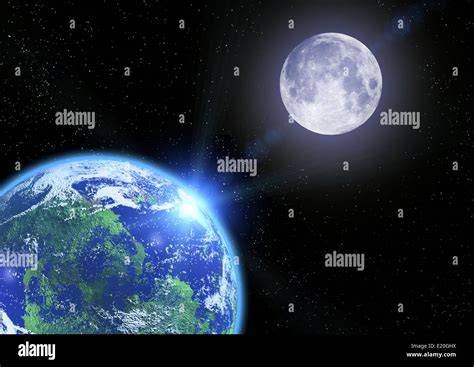
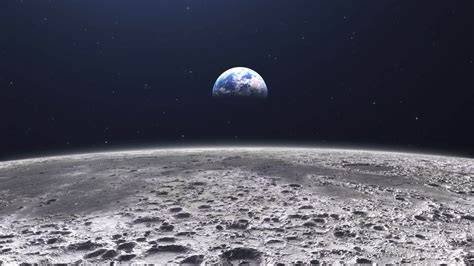
The Moon is Earth’s only natural satellite, orbiting our planet from a distance of about 384,000 kilometers. While it may look like a silent rock floating in space, its gravitational pull constantly interacts with Earth. It controls ocean tides, helps stabilize Earth’s rotation, influences climate patterns, and even affects the behavior of many living organisms. In many ways, life on Earth evolved under the presence of the Moon.
But what if one day the Moon suddenly disappeared?
What would happen to our oceans, our nights, our seasons, and even life itself? Would Earth continue normally, or would the planet slowly fall into chaos?
. What Would Happen to Ocean Tides?
One of the Moon’s most powerful effects on Earth is something we witness every single day — ocean tides. The Moon’s gravity constantly pulls on Earth’s oceans, causing water levels to rise and fall in a regular cycle. This is why coastal regions experience high tides and low tides throughout the day.
A high tide occurs when ocean water is pulled slightly toward the Moon, while low tide happens in areas where water levels temporarily fall. Although the Sun also affects tides, the Moon plays the dominant role because it is much closer to Earth.
If the Moon suddenly disappeared, tides would not vanish completely, but they would become far weaker. Solar tides created by the Sun would still exist, yet they would be only a fraction of the strength of today’s tides. At first glance, this may not sound dangerous, but Earth’s oceans and coastal ecosystems depend heavily on strong tidal movement.
Tides help circulate nutrients through oceans, support marine food chains, and maintain habitats such as tidal pools, mangroves, and coastal wetlands. Without normal tidal activity, many marine ecosystems would begin to collapse or change drastically. Creatures that evolved around tidal rhythms — including crabs, shellfish, and many fish species — would struggle to survive.
Coastal environments would also slowly transform. Some shorelines could become stagnant and less oxygen-rich, while others would experience changes in erosion and sediment movement. Over long periods, the absence of strong lunar tides would reshape many coastal landscapes across the planet.
The Moon’s influence on the oceans is so deeply connected to Earth that removing it would not simply calm the seas — it would alter entire ecosystems.
Earth’s Rotation Would Change Over Time
The Moon does more than orbit Earth — it also quietly affects how our planet rotates. Through its gravitational pull, the Moon creates friction within Earth’s oceans, and this process slowly reduces Earth’s rotational speed. In simple terms, the Moon acts like a natural brake that gradually slows the planet down.
Billions of years ago, Earth rotated much faster than it does today. Scientists believe a single day on early Earth may have lasted only a few hours. Over immense periods of time, the Moon’s influence helped slow Earth’s spin to the 24-hour day we experience now.
If the Moon disappeared, this braking effect would stop. Earth would continue rotating, but its long-term balance would begin changing differently. The planet’s rotation could slowly become less stable over extremely long timescales.
Although humans would not notice immediate changes, scientists believe Earth’s days might remain shorter in the distant future compared to what they would have become with the Moon present. More importantly, the Moon also helps stabilize Earth’s axial tilt, which influences climate and seasons. Without that stabilizing effect, Earth’s rotation could wobble more unpredictably over thousands or millions of years.
The Moon may appear distant and passive, but it quietly helps maintain the rhythm of our planet every single day.
The Impact on Animals and Nature
Life on Earth evolved alongside the Moon for billions of years. Because of this long relationship, many plants and animals depend on lunar cycles in ways that are easy to overlook.
Sea turtles are one example. After hatching on beaches, many baby turtles use the natural brightness of the Moon reflecting over the ocean to find their way toward water. Without moonlight, their navigation patterns could become even more confused than they already are from artificial city lights.
Coral reefs also depend on the Moon. Many coral species release eggs and sperm during specific moon phases, especially around full moons. This synchronized spawning increases the chances of reproduction and survival. Removing the Moon would disrupt these carefully timed biological events.
Many animals also connect their hunting and migration behavior to lunar brightness. Wolves, owls, insects, fish, and countless other species respond differently during full moons and darker nights. Some predators become more active under moonlight, while prey animals hide more carefully. These behaviors are part of natural systems shaped over millions of years.
Without the Moon, nature would not suddenly collapse overnight, but many ecosystems would slowly lose patterns they evolved to depend upon. Species would be forced to adapt to a world that no longer follows the familiar lunar rhythm.
Would Life on Earth Have Developed the Same Way?
Some scientists believe that without the Moon, Earth might never have become the stable and life-friendly planet we know today. The Moon’s influence reaches far beyond tides and moonlight — it may have shaped the entire evolution of life itself.
One important reason is Earth’s stability. The Moon helps keep Earth’s axial tilt relatively steady, which prevents extreme and chaotic climate shifts. A more unstable tilt could have caused severe environmental changes over time, making it harder for complex life to evolve consistently.
Tides may also have played a major role in the origin of life. Early tidal zones repeatedly mixed water, minerals, and organic chemicals along coastlines. Some scientists think these environments may have helped simple chemical reactions eventually develop into primitive life forms.
Without strong lunar tides, these coastal conditions would have been very different. Earth may still have supported life in some form, but the path of evolution could have changed completely. Intelligent life — including humans — may never have appeared in the same way.
Conclusion — The Silent Partner That Made Earth Possible
The Moon has always seemed calm, distant, and familiar — a glowing object that quietly watches over Earth every night. Because it has always been there, it is easy to think of it as something beautiful but unimportant. Yet the deeper scientists study Earth, the clearer it becomes that the Moon is woven into the planet’s very existence.
From controlling tides and stabilizing Earth’s rotation to influencing climate, ecosystems, and possibly even the evolution of life itself, the Moon does far more than light up the night sky. Its presence affects oceans, animals, human history, and the natural balance of the planet in ways most people never notice.
If the Moon disappeared, Earth would not instantly shatter into chaos, but the planet would slowly become a very different world — darker nights, weaker tides, unstable climates, disrupted ecosystems, and a future far less predictable than the one we know today.