Lets Explore the Meteors More
Anatomy of a Meteor — From Grain to Flash
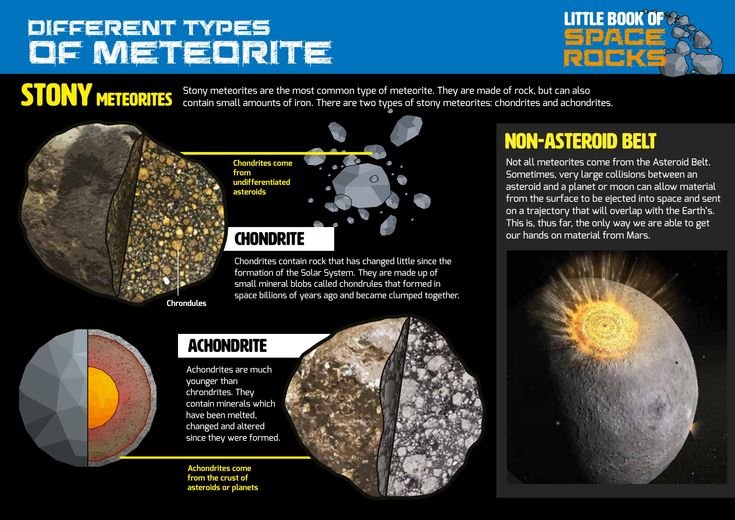
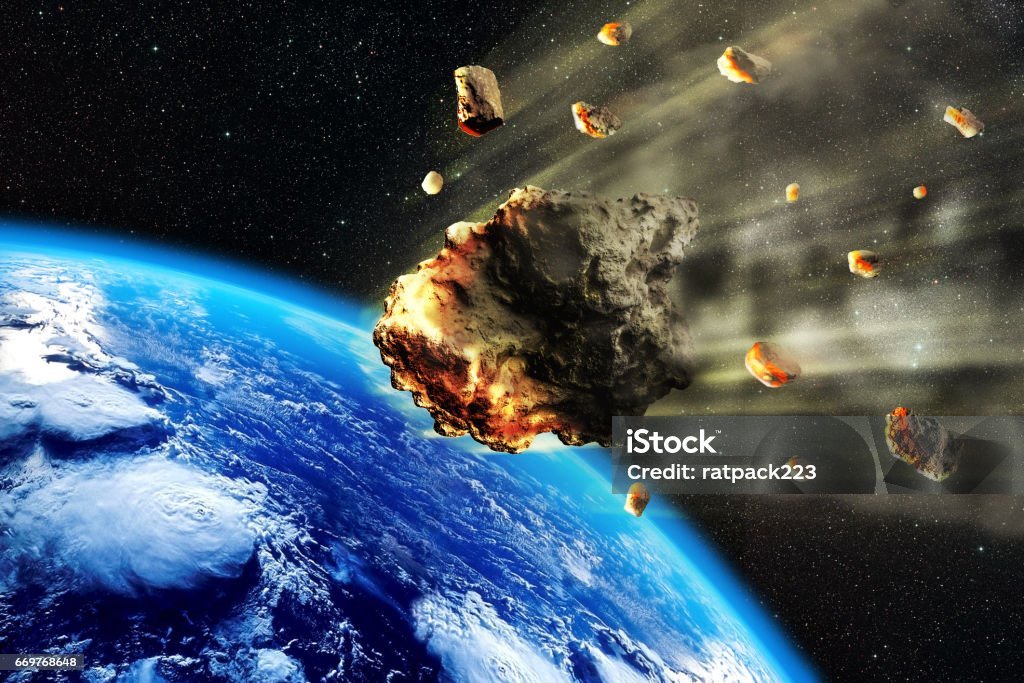
A meteor begins as a meteoroid, often no larger than a grain of sand, traveling through space at speeds that can exceed 70 km/s. Its structure is usually a compact mix of silicate minerals, metals like iron and nickel, and sometimes carbon-rich compounds. As it enters Earth’s atmosphere, the outer layer does not simply “burn” in the usual sense—it undergoes ablation, where intense frictional heating strips away material layer by layer. The bright streak we see is not the rock itself glowing, but a plasma trail—a thin column of ionized air and vaporized meteoroid particles. Larger meteoroids may fragment mid-air, producing multiple luminous streaks, each marking a piece breaking off under thermal and mechanical stress.
Color Chemistry — What the Light Reveals
The colors in a meteor are not random; they are a direct fingerprint of its composition and the atmosphere it passes through. When atoms are heated and excited, they emit light at specific wavelengths. Sodium produces a strong yellow glow, iron contributes golden or orange tones, while magnesium often appears bluish-white. Atmospheric gases play their role too—oxygen can emit green or red, and nitrogen contributes faint purple hues. The variation in color along a meteor’s path can indicate changes in temperature or composition as different المواد vaporize at different altitudes. In this way, a brief flash across the sky becomes a fast-moving chemical spectrum.
Citizen Science — Tracking the Sky Together
Meteor observation is not limited to professional astronomers. Organizations like NASA and the International Meteor Organization rely heavily on coordinated public observations. The IMO collects reports from observers worldwide to estimate Zenithal Hourly Rate (ZHR)—a standardized measure of meteor activity under ideal conditions. These reports help track comet debris density, since most meteor showers originate from material shed by comets over centuries. NASA’s fireball networks, equipped with automated cameras, record brighter events to calculate trajectories and even predict potential meteorite fall zones. Together, amateur observations and professional systems create a distributed monitoring network far more extensive than any single observatory.
Mechanics of Observation — Counting What You See
Meteor observation follows a surprisingly structured method. Observers use a field-of-view approach, typically lying back and watching a fixed section of the sky while noting the number of meteors, their दिशा (direction), brightness, and duration. To standardize observations, factors like limiting magnitude (the faintest visible star) and sky conditions are recorded. Counts are then corrected to estimate ZHR, allowing comparisons across different locations and times. The key is consistency—watching for at least an hour, avoiding distractions, and recording data immediately. Even without instruments, a careful observer contributes usable data when following these principles.
A Brief Flash, A Lasting System
A meteor lasts seconds, yet it connects multiple layers of science—planetary formation, atmospheric physics, and global collaboration. What appears as a fleeting streak is, in reality, a precise interaction between matter and motion, composition and energy. Each observation, whether by a researcher or a patient sky-watcher, adds to a growing dataset that maps how our solar system sheds and redistributes its material. The sky does not repeat the same show twice, but it leaves behind patterns—if we choose to watch closely enough.