🌖 Chandrayaan-4: India’s Ambitious Lunar Sample-Return Mission
India’s space agency, ISRO, is preparing for one of its most complex and scientifically significant missions yet: Chandrayaan-4 — a mission that aims not just to land on the Moon, but to bring samples back to Earth. This is a big leap forward in lunar exploration, and here’s what makes it so exciting.
Why Chandrayaan-4 Matters
Sample return: Chandrayaan-4 is designed to collect lunar soil and rock (regolith) from the Moon and transport them back to Earth. Wikipedia+2The Times of India+2
Strategic complexity: According to ISRO, the mission will require docking in lunar orbit, ascent from the Moon, and a safe re-entry to Earth. The Indian Express+2The Times of India+2
Scientific value: Returned samples can answer deep questions about lunar geology, the history of the Moon, and even the early Solar System.
Technological demonstration: This mission will showcase ISRO’s capabilities in advanced rendezvous, docking, sample collection, and re-entry — capabilities that are very challenging and rare. The Indian Express+1
National prestige: Only a few nations (USA, Russia, China) have successfully done a lunar sample-return mission. Chandrayaan-4, if successful, will place India in that elite group. India Today+1
Timeline & Status
Target year: ISRO is targeting 2028 for the launch of Chandrayaan-4. India Today+2The Economic Times+2
Design: The design of Chandrayaan-4 has reportedly been finalized by ISRO. The Indian Express+1
Approval: The mission has government approval, and ISRO has also begun planning for the curation and analysis facility that will store and study returned lunar samples. mint+1
Science community involvement: ISRO held a National Science Meet in April 2025, where scientists from across India discussed potential landing sites, sample-handling protocols, and analysis strategies. ISRO
Mission Architecture: How Chandrayaan-4 Will Work
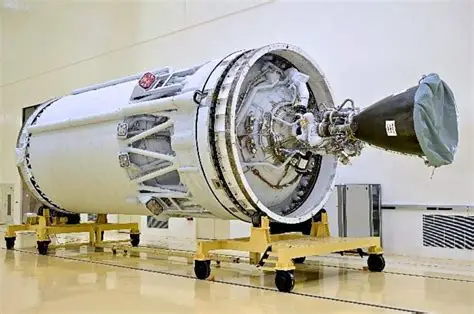
Chandrayaan-4 isn’t a simple single-rocket mission. According to reports, the mission plan involves five separate modules. The Indian Express+1 Here’s a breakdown:
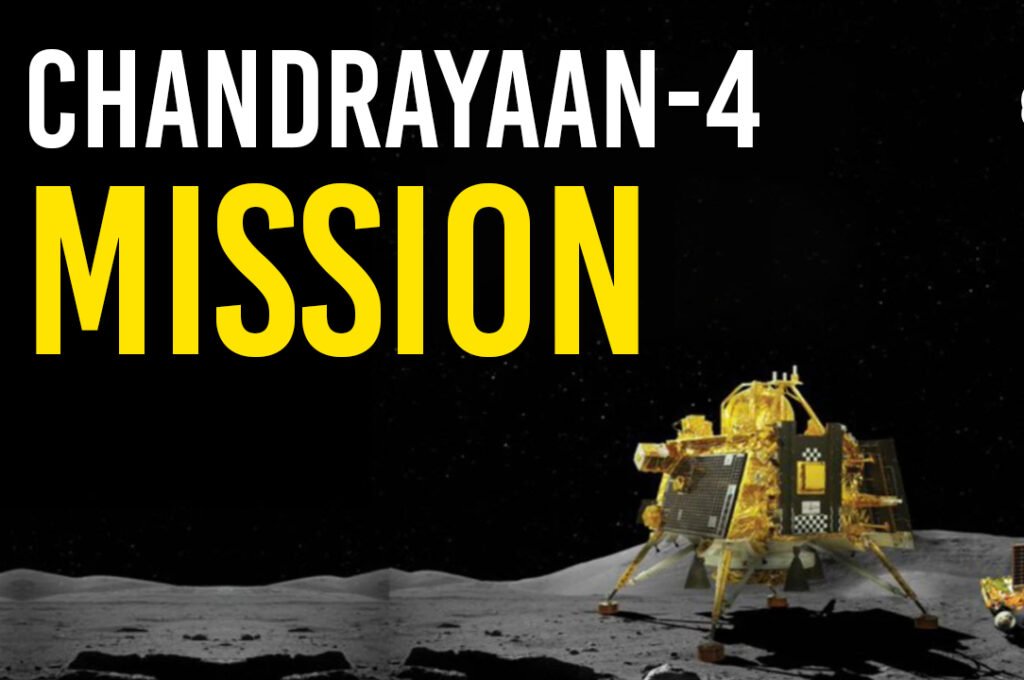
Descender Module (“lander”): This will land on the Moon’s surface and collect samples using a robotic arm and a drill. The Times of India
Ascender Module: After the samples are collected, this module will take off from the Moon with the sealed container of lunar material. The Times of India+1
Transfer Module: Remains in lunar orbit; its job is to rendezvous and dock with the ascender module once it lifts off. The Times of India
Re-Entry Module: This will carry the sealed sample container back toward Earth. The Times of India
Propulsion Module (PM): Helps carry and maneuver the other modules, including during Earth-lunar transfer phases. The Times of India
Launch Strategy: According to reports, ISRO may use two separate launches to put all these modules in position. The Times of India One stack may include the descender, ascender, and propulsion modules, while another stack may carry the transfer and re-entry modules. The Times of India
Key Phases of Chandrayaan-4
Here’s how the mission might play out (based on public descriptions):
Launch & Injection
Two rockets launch modules into orbit.
Modules are maneuvered to lunar transfer orbit.
Lunar Orbit Insertion
The propulsion module helps insert other modules into a stable lunar orbit.
The transfer and re-entry modules wait in lunar orbit.
Descent and Landing
The descender module and ascender separate from the stack.
The lander (descender) soft-lands on the Moon. The Times of India
Sample Collection
A robotic arm scoops up ~2–3 kg of surface material. The Times of India
A drill is used to collect sub-surface samples too. The Times of India
Samples are sealed in canisters to prevent contamination. The Times of India
Ascent
The ascender lifts off from the lunar surface with the sealed sample container. The Times of India
Docking in Lunar Orbit
The ascender docks with the transfer module in lunar orbit. The Indian Express+1
Samples are transferred from the ascender to the re-entry module. The Times of India
Return to Earth
The transfer-re-entry stack leaves lunar orbit. The Times of India
At a suitable corridor, the re-entry module detaches and enters Earth’s atmosphere ballistically. The Times of India
The re-entry module lands back on Earth, carrying the lunar samples. The Times of India
Special Focus: Sample Integrity & Contamination Control
Preserving the purity and scientific value of lunar samples is a major priority for ISRO:
The collected samples will be stored in leak-proof containers to ensure they remain uncontaminated. The Times of India
ISRO is setting up a Curation Facility on Earth: clean rooms (Class 100 and Class 1000, ISO standards) will be used to inspect, store, and analyze the returned lunar material. India Today
According to ISRO, strict protocols will be used to avoid contamination during sample handling, transfer, and storage. The Times of India
Technological Challenges and Innovations
Chandrayaan-4 is a massive challenge — here are some of the most important technical hurdles and how ISRO plans to tackle them:
Lunar Ascent: Building a module (the ascender) that can take off from the Moon to lunar orbit is very difficult. It needs reliable propulsion, a lightweight structure, and autonomous control.
Docking in Lunar Orbit: Rendezvous and docking in lunar orbit is not trivial. The spacecraft must align and dock precisely with minimal fuel. This is something ISRO hasn’t publicly done before. The Indian Express+1
Sample Collection: Robotic arms, drills, and sealing mechanisms must work flawlessly in lunar gravity and dusty conditions.
Thermal Management: The Moon has harsh temperature conditions. Instruments, especially the re-entry module, must survive wide thermal swings.
Re-entry: The re-entry module will experience high heating when entering Earth’s atmosphere. Its heat shield and deceleration systems must be robust.
Contamination Control: Maintaining sample purity involves clean-room standards, special canisters, and strict protocols to ensure no Earth microbes mix with lunar material.
Science Goals & Importance
Geology & Composition: By studying the returned samples, scientists can precisely determine the chemical and mineral composition of the lunar surface.
History of the Moon: The samples may give clues about how the Moon formed and evolved, including its volcanic past or how its surface has changed.
Solar System Insights: Lunar material can contain records from the early Solar System, including solar wind, cosmic impacts, and more.
Future Missions: This mission would lay the groundwork for future, more ambitious lunar projects (crew missions, a lunar base, or a station).
Mission Risk, Challenges & Why Success Isn’t Guaranteed
Here are some key risks:
Launch Complexity: Two separate launches must go exactly as planned. Any deviation could jeopardize the mission.
Docking Risk: If modules fail to dock in lunar orbit, sample return becomes impossible.
Sample Loss or Contamination: If sealing mechanisms fail, samples could be contaminated or lost.
Ascent & Re-entry Failure: Launching from the Moon (ascent) and re-entering Earth’s atmosphere are high-risk phases.
Budget & Schedule Overruns: Such a complex mission could face cost or time escalations.
Technology Readiness: Some required systems (e.g., autonomous sample collection, docking, re-entry) must work flawlessly.
What Chandrayaan-4 Means for India & the World
Space Leadership: Pulling off a sample-return mission would position India alongside a few spacefaring nations that have retrieved lunar materials.
Scientific Legacy: The lunar samples would be a treasure trove for scientists in India and around the world.
Demand for Home-Grown Capability: Technologies developed for this mission (docking, orbital mechanics, precision landing) could benefit future missions, including potential crewed lunar missions.
Inspiring Generations: Just like Chandrayaan-3 inspired millions, Chandrayaan-4 has the power to spark imaginations — especially among students, scientists, and innovators.
Current Challenges & Road Ahead
2028 Goal: The target launch year is 2028, but this depends on continued funding, development, and technological validation. India Today
Curation Facility: ISRO is already planning a sample storage and research lab. India Today
International Collaboration: While Chandrayaan-4 is primarily an ISRO mission, the success could open doors to greater international scientific collaboration.
Policy & Regulation: Safe handling of extraterrestrial material involves policies aligned with planetary protection norms (though lunar missions have relatively lower biological risk).
Final Thoughts
Chandrayaan-4 is not just another lunar mission for India. It’s a defining moment — a step into truly advanced space exploration. If successful:
India will bring back moon rocks — a feat of incredible scientific and technical difficulty.
ISRO will demonstrate complex orbital mechanics, docking, ascent from the Moon, and re-entry — capabilities that few space agencies have.
The returned samples could unlock answers about our Moon’s history, our Solar System’s evolution, and possible future uses of lunar resources.
For India, it’s a mission of pride, science, and future aspirations. For the world, it’s another crucial contribution to lunar science.
And for young students, engineers, and space lovers, it’s a promise: the sky (or rather, the Moon) is not the limit — it’s just the beginning. 🚀