India’s Giant Leap: The LVM3-M5 / CMS-03 Mission
On November 2, 2025, ISRO successfully launched CMS-03, a heavy multi-band communication satellite, onboard its reliable heavy-lift launcher LVM3 (M5 mission). The satellite, also known as GSAT-7R, primarily strengthens the communication infrastructure of the Indian Navy.
What Is CMS-03?
CMS-03 is a multi-band communication satellite, also known as GSAT-7R, designed primarily to serve the Indian Navy. Wikipedia+2India Today+2 Weighing around 4,410 kilograms, it is the heaviest communication satellite ever launched from Indian soil. The Times of India+2India Today+2
What does “multi-band” mean? It means CMS-03 supports multiple frequency bands — C-band, extended C-band, and Ku-band — enabling it to handle large volumes of voice, data, and video securely. India Today This makes it a powerful node for communications, especially over vast oceanic regions.
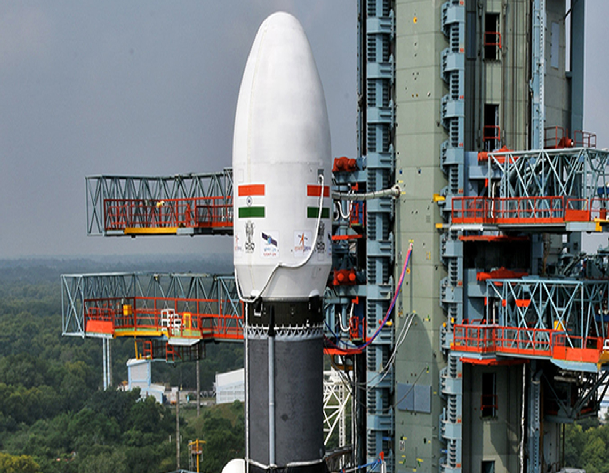
The Rocket: LVM3-M5 (“Bahubali”)
The satellite was placed into orbit using ISRO’s LVM3 rocket, nicknamed “Bahubali” for its strength. India Today Here are its main features:
Three stages:
Two solid strap-on boosters (S200). The Times of India
One liquid-fuel core stage (L110), using a liquid propellant combination. The Times of India
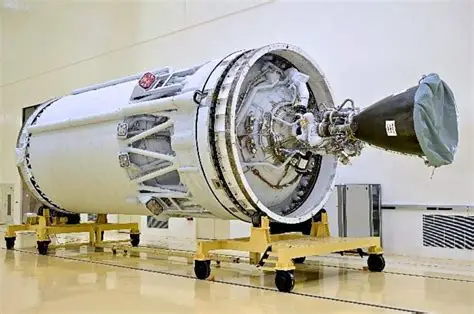
A cryogenic upper stage (C25), using liquid hydrogen and liquid oxygen. The Times of India
Size & Mass: The rocket stands about 43.5 meters tall and had a liftoff mass of around 642 tonnes. The Defense News
Performance: After the solid boosters separated, the liquid core ignited, and finally the cryogenic stage took over. The upper stage burn lasted until ~950 seconds into flight, pushing the vehicle to a speed of ~10.14 km/s. The Times of India
Satellite Separation: CMS-03 separated from the rocket about 965.9 seconds (≈ 16 minutes) after launch, at an altitude of ~180 km. The Defense News
Orbit and How CMS-03 Reaches Its Final Position
Initial Orbit: The satellite was injected into a Geosynchronous Transfer Orbit (GTO). ISRO+1 In simpler terms, GTO is an elliptical orbit — not the final resting place, but a “launching pad” from which satellites can move to their final orbit.
Orbit Raising: After separation, CMS-03 will use its onboard Liquid Apogee Motor (LAM) to gradually raise and shape its orbit. India Today It will perform a few engine burns — first to push out the apogee (far point) and then to circularize — to reach a stable geostationary orbit, where it will appear fixed above a point on Earth.
Commissioning: The orbital maneuvering and testing phase is expected to take 4–7 days, and then another 4–5 weeks to make the satellite fully operational. India Today
Features of CMS-03
Heavy-Lift Capability
Launching a 4,410 kg satellite into GTO demonstrates ISRO’s increased capability to handle large and heavy payloads without outsourcing. Until now, many countries relied on foreign rockets for very heavy satellites. adda247Maritime Strength
With CMS-03, India’s Navy gets a dedicated, indigenously built satellite to improve its command and communication in the ocean. This is strategically very significant, especially considering the importance of the Indian Ocean in geopolitics and trade. India TodayTechnological Confidence
The mission strengthens confidence in the LVM3 rocket — its ability to reliably launch heavy payloads is proven again. India TodaySelf-reliance
This is a strong signal of India’s growing independence in space technology: from building its own rockets to deploying its own heavy satellites. adda247Dual-Use Applications
While primarily for the Navy, the satellite’s communication capabilities can also be useful for civilian applications — like disaster management, remote communication, and even maritime internet for ships. The Defense News
Challenges and Considerations
Precision in Orbit Insertion: Placing such a heavy satellite accurately in GTO is a complex task. Slight deviations can affect how much fuel the satellite must use later to reach its final orbit.
Fuel Consumption for Orbit Raising: Because CMS-03 has to use its own engine to move from GTO to a circular geostationary orbit, it burns a considerable amount of its propellant early on. That means part of its lifetime is “spent” just getting into place.
Strategic Risks: While this enhances India’s maritime communication, any space-based military asset also becomes a target in times of geopolitical tension. Satellite security and anti-jamming measures become very important.
Behind the Scenes: What Made This Possible
Engine Technology: The cryogenic upper stage (C25) uses ISRO’s CE-20 engine, which burns liquid hydrogen and liquid oxygen. The Times of India Cryogenic engines are more efficient but also harder to build and operate, so mastering them is a big deal.
Launch Readiness: The rocket was fully assembled, integrated with the satellite, and moved to the Second Launch Pad at the Satish Dhawan Space Centre, Sriharikota. India Today
Countdown & Launch: ISRO began its final 24-hour countdown a day before launch. India Today The launch went smoothly, with all stages firing as planned and CMS-03 separating cleanly.
What’s Next?
Orbit Commissioning: In the coming days, CMS-03 will fire its onboard engine multiple times to reach geostationary orbit, and then undergo tests before becoming fully operational. India Today
Service Begins: Once it’s commissioned, the satellite will start handling communications for the Navy and possibly other strategic and civilian users.
Future Missions: The success of this launch strengthens ISRO’s case for more heavy-lift missions — potentially for even more advanced communication satellites, or for ambitious missions (like crewed flights or deep-space probes).
Final Thoughts
The LVM3-M5 / CMS-03 mission is more than just another satellite launch. It’s a strategic milestone in India’s space journey, combining heavy-lift capability, national security, and technological maturity. For the general public, it represents progress: in infrastructure, self-reliance, and the ability to use space for both civilian and defense purposes.
The success of this mission will likely open doors to more advanced space projects, cement India’s status in the global space community, and contribute to safer, more connected seas.