🚀 Gaganyaan: India’s Step Into Human Spaceflight
Gaganyaan represents one of the most meaningful technological moments in India’s history. It is India’s first mission designed to send humans into space, and while it stands on a foundation of engineering, science, and precision, it also carries a sense of national confidence: yes, we can do this too.
🌍 What Gaganyaan Is About
Gaganyaan is a mission by ISRO to send up to three Indian astronauts into low Earth orbit, at about 400 km altitude, for a duration of up to seven days.
The name combines two Sanskrit words — Gagana (sky) and Yāna (vehicle) — describing a spacecraft meant for human presence in space.
This will make India the fourth nation in the world to achieve human spaceflight capability with its own systems.
🧑🚀 Why This Mission Matters
Even if you are not a space enthusiast, the importance of Gaganyaan is easy to appreciate.
✔️ A Major National Capability
Producing a human-rated spacecraft means India joins a league of nations that can design, validate, and operate highly reliable space systems.
✔️ Technological Boost Across Industries
The mission demands expertise in robotics, materials, propulsion, safety engineering, medical monitoring, and communications. These breakthroughs eventually flow into everyday industries, raising national capability.
✔️ Inspiration for Future Indian Engineers
Human spaceflight naturally sparks curiosity. Students who watch Gaganyaan unfold will grow up believing that working on space missions is a possible career path — not a distant dream.
✔️ A Foundation for Bigger Goals
Gaganyaan is not the end goal. It sets the stage for:
India’s independent space station
Long-duration crewed missions
Deeper collaborations in global space exploration
Eventually, Indian astronauts on the Moon
🛰️ Understanding the Gaganyaan Spacecraft
The spacecraft has two primary components:
1. Crew Module (CM)
This is the part that houses the astronauts.
It includes:
A protective heat shield
Life-support and environmental controls
Seats and safety harnesses
Parachute-based landing system
Communication interfaces
Thermal protection to handle intense re-entry heat
2. Service Module (SM)
Attached to the rear of the Crew Module, the Service Module provides:
Power (solar panels + batteries)
Propulsion and orientation control
Consumables storage
Additional thermal control
Together, they form a safe, controlled environment for astronauts from launch to splashdown.
🚀 The Launch Vehicle: Human-Rated LVM3
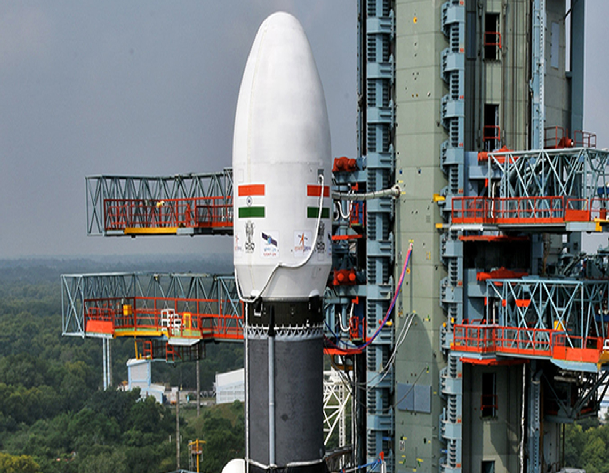
India’s most powerful rocket, LVM3, is being tuned specifically for human safety.
For a crewed mission, reliability becomes non-negotiable, so the rocket undergoes:
Redundancy upgrades
Health monitoring sensors
Vibration and acoustic reduction
Stricter testing and certification
This version is called the Human-Rated LVM3 (HLVM3).
⚠️ The Crew Escape System (CES)
Safety is the heart of human spaceflight.
The Crew Escape System is designed to rapidly pull the crew capsule away from the rocket if anything goes wrong during launch. It works like a powerful emergency extraction tower that activates within milliseconds.
ISRO has tested this system multiple times, including an inflight abort test — a crucial milestone proving that astronauts can be protected even in extreme scenarios.
🌡️ Re-Entry and Landing
Once the mission ends, the spacecraft will return to Earth. The final phase includes:
Controlled de-orbit
Atmospheric re-entry at extremely high speed
Heat shield protection
Sequential parachute deployment
Splashdown in the Indian Ocean
Recovery by the Indian Navy
This combination ensures the astronauts return safely and smoothly.
🧪 Before Humans Fly: Multiple Test Missions
Gaganyaan will include several uncrewed flights. These are essential to verify systems like:
Life-support
Parachutes
Heat shield performance
Communication and navigation
Crew Module stability
Crew Escape System reliability
One of these missions includes Vyommitra, a humanoid robot developed to simulate human responses and test cabin conditions.
👨🚀 Training India’s Astronauts
ISRO has shortlisted highly skilled Indian Air Force pilots for the mission. Their training involves:
High-G centrifuge experiences
Microgravity simulations
Survival training
Spacecraft systems learning
Simulated mission rehearsals
Physical and psychological conditioning
Their preparation ensures that when the spacecraft launches, the crew is fully ready for every situation.
🔧 The Challenges
Human spaceflight is inherently complex. ISRO must tackle:
Extremely high safety standards
New technologies for life support
Precision in every part of design and testing
Managing cost and time
Coordinating with global space agencies for training and data
Despite these challenges, India has consistently shown resilience and determination in ambitious missions.
📅 Looking Ahead
Based on ISRO’s current roadmap:
Uncrewed test missions continue through 2026
First crewed mission expected around 2027
Further crewed missions planned after successful validation
Indian space station development in the 2030s
Each milestone pushes India closer to long-term human presence in space.
🇮🇳 A Mission That Reflects India’s Spirit
Gaganyaan is a technological achievement, but it’s also a reflection of India’s growth, talent, and confidence.
It proves that a country can dream big — and build the capability to make those dreams real.
It represents:
National pride
Scientific strength
Teamwork across thousands of engineers, researchers, and workers
A belief that India belongs among the world’s leading spacefaring nations
🌠 In Simple Words
Gaganyaan is India saying:
“We’re ready. We’re capable. And we’re going to space — on our own terms.”