Meteor Shower
1. The Cosmic Debris Hook — Not a Shooting Star
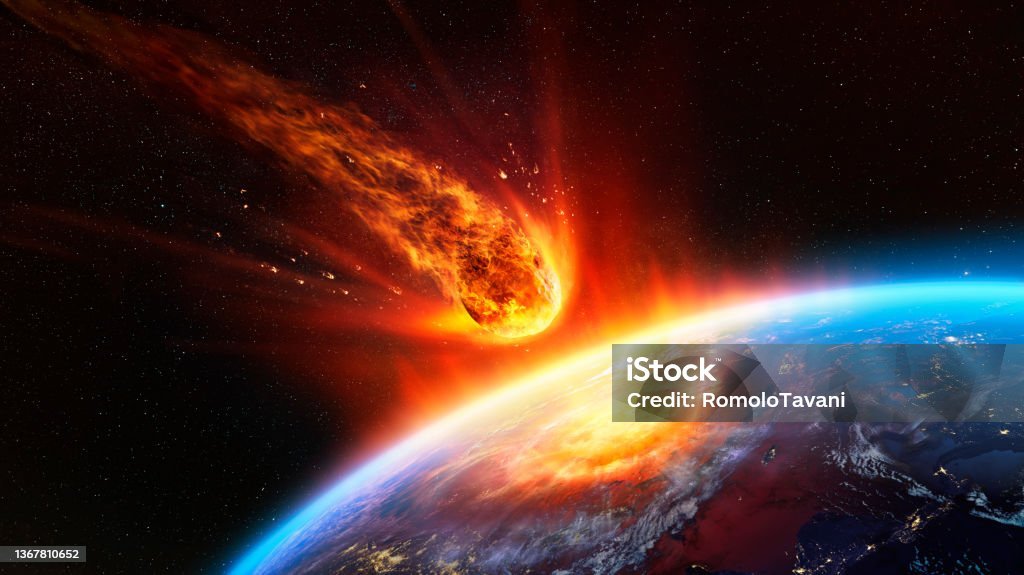
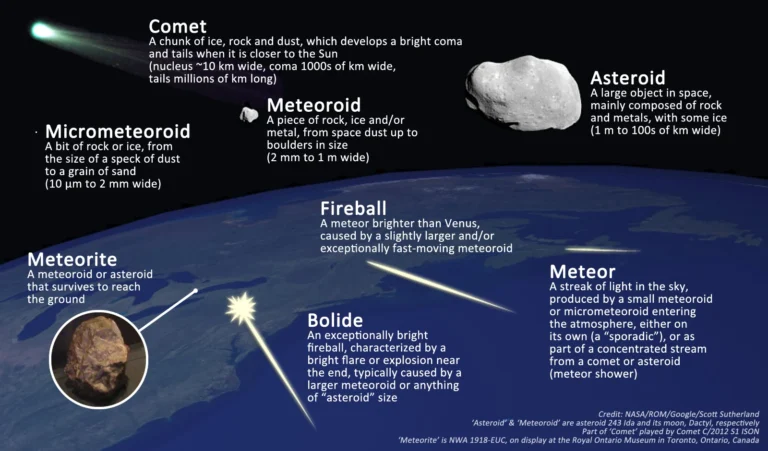
The phrase “shooting star” sounds poetic, but it quietly points in the wrong direction. Nothing is actually shooting from a star. What you’re seeing is much closer to home—tiny fragments of cosmic debris colliding with Earth’s atmosphere.
Think of space not as empty, but as layered with invisible trails—clouds of dust left behind by comets as they travel around the Sun. These trails can stretch across millions of kilometers, lingering long after the comet has moved on. When Earth passes through one of these dusty paths, the particles plunge into our atmosphere at high speed.
For a brief second, that dust—often no larger than a grain of sand—turns into a streak of light. Not a star falling, but a memory burning.
2. The Lyrids Connection — A Window into the Past
One of the oldest recorded meteor showers is the Lyrids meteor shower. Historical records from ancient China mention its appearance more than 2,500 years ago. That alone tells you something important: meteor showers are not new events. They are part of a repeating cosmic rhythm.
The Lyrids originate from debris left by the comet Comet Thatcher. This comet takes about 415 years to orbit the Sun, yet its dust trail remains, intersecting Earth’s path every April.
The same pattern appears elsewhere:
- The Perseids meteor shower come from the comet Swift–Tuttle
- The Leonids meteor shower trace back to Tempel–Tuttle
- The Geminids meteor shower are unusual—they originate from an asteroid, 3200 Phaethon
Each shower is like a signature, linking what we see in the sky to an object that may be far away—or long gone.
3. The Story of Wishes — And a Misconception
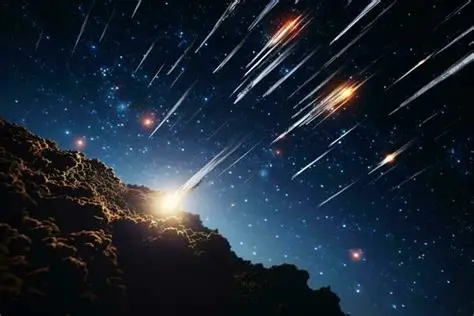
The idea that you should make a wish upon a shooting star feels universal, but it has roots in ancient beliefs. In some Greek traditions, it was thought that the gods occasionally opened the heavens to look down at Earth. When this happened, a streak of light—a meteor—would appear. A wish made at that moment might be heard.
It’s a beautiful idea, but it rests on a misunderstanding. Meteors are not rare signals from beyond; they are frequent, natural interactions between Earth and space debris. On peak nights, you can see dozens in an hour. During rare meteor storms, hundreds can appear.
Correcting this doesn’t diminish the experience—it reframes it. You’re not catching a rare cosmic accident. You’re witnessing a predictable, repeating event shaped by gravity, motion, and time.
The wonder doesn’t disappear. It just shifts—from myth to mechanism.
4. From Dust to Fire — A Simple Explanation
At the heart of a meteor shower is a surprisingly simple process.
A tiny particle—sometimes no bigger than a grain of sand—enters Earth’s atmosphere at speeds that can exceed 50 kilometers per second. At that velocity, it doesn’t just fall; it slams into air molecules.
This collision compresses and heats the air in front of the particle. The heat becomes so intense that both the air and the particle itself begin to glow. What you see is not the object burning like wood in a fire, but a rapid release of energy—a flash of plasma tracing its path.
For a second or less, that grain of dust becomes visible across tens of kilometers of sky. Then it’s gone, completely vaporized, leaving no trace except the memory of light.
Closing Thought
Meteor showers are easy to overlook because they feel familiar. A quick streak, a passing glance, and then the moment is over. But behind that simplicity lies a deeper story—of comets shedding material over centuries, of Earth moving through invisible structures, of tiny particles carrying the history of the solar system.